
|
Features
|
|
|
|
Books
|
|
|
|
Fun & Games
|
|
|
|
Contact Us
|
|
|
John's Journal... Entry 64, Day 3
Nervously Feeding Deer
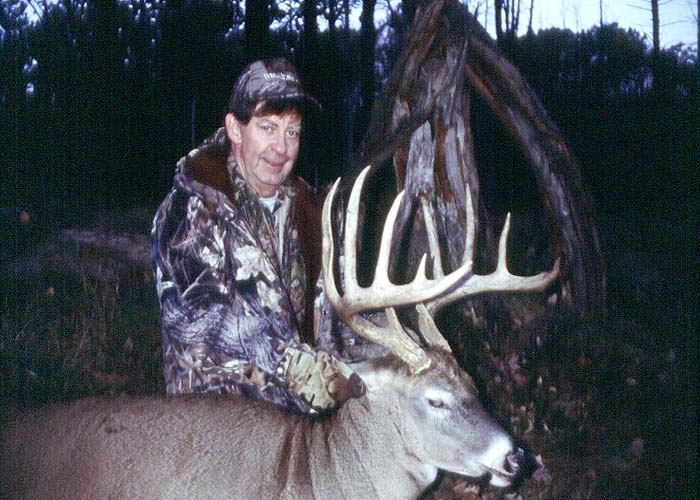 EDITOR'S
NOTE: To know when to shoot, you must become a student of deer and
their behavior, pay attention to the deer you're hunting and what they're
doing and understand the moods and habits of deer.
EDITOR'S
NOTE: To know when to shoot, you must become a student of deer and
their behavior, pay attention to the deer you're hunting and what they're
doing and understand the moods and habits of deer.
Because this kind of deer probably will attempt to jump, if you're bowhunting, you may want to shoot somewhat low on this deer, anticipating the squat. Take the first good shot you get at this deer because more than likely he will spot you before you shoot.
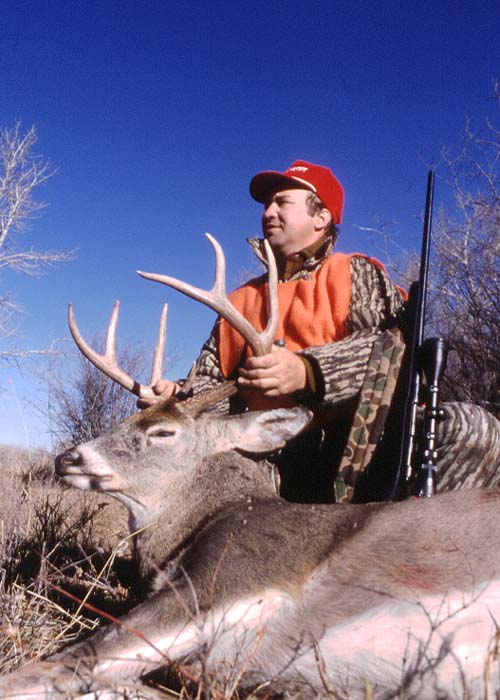 This
buck will come in very slowly to feed -- often through a thicket. Usually
he'll stand in thick cover for a long time -- looking up at the trees
and out at the forest floor before he comes in and then only move a few
yards at a time. He'll stop constantly to look in all directions -- swishing
his tail frantically as though he's swatting a swarm of flies.
This
buck will come in very slowly to feed -- often through a thicket. Usually
he'll stand in thick cover for a long time -- looking up at the trees
and out at the forest floor before he comes in and then only move a few
yards at a time. He'll stop constantly to look in all directions -- swishing
his tail frantically as though he's swatting a swarm of flies.
When a buck sees does in the area, he'll continuously watch them to see if they exhibit any hint of danger. Often a buck will lose some of his normal wariness and calm down if he sees does feeding calmly. If he finds no does in a region, he'll come very slowly into the area, turning to look at every sound. Every time a squirrel barks, a tree limb falls, or a woodpecker screams, this buck will jerk his head around. When he starts to put his head down to feed, he will pull it up quickly to see any danger. Before he takes a step forward, usually he will look in at least three directions. When eating acorns or shrubs, he will take the food into his mouth quickly and then bring his head up to chew. He often will swish his tail just before he brings his head up and puts his head down. You can use this tail wagging as the key factor to let you know when you can stand and when you can shoot.
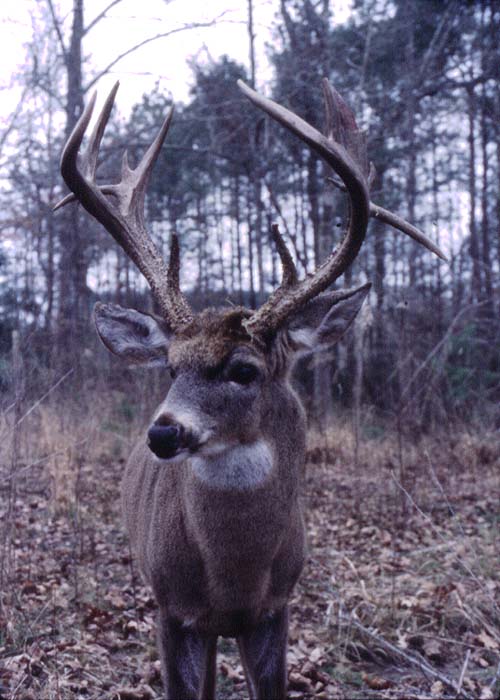 Study
the deer to make sure he telegraphs his moods with his tail. Some deer
do, and some deer don't. Count the number of seconds from the time the
deer puts his head down until he picks it up again, which will help you
pattern the deer's movements.
Study
the deer to make sure he telegraphs his moods with his tail. Some deer
do, and some deer don't. Count the number of seconds from the time the
deer puts his head down until he picks it up again, which will help you
pattern the deer's movements.
Once you establish a pattern, either by the buck's tail swish or the number of seconds he has his head down, you then will know when you can stand and when you can draw because the animal will have his head down. If the deer brings his head up quickly and cocks it back to either the left or the right, he's probably considering breaking to run or at least to jump backwards. If you get a good hit, you may have an opportunity to get off a second shot before the deer moves out of range.
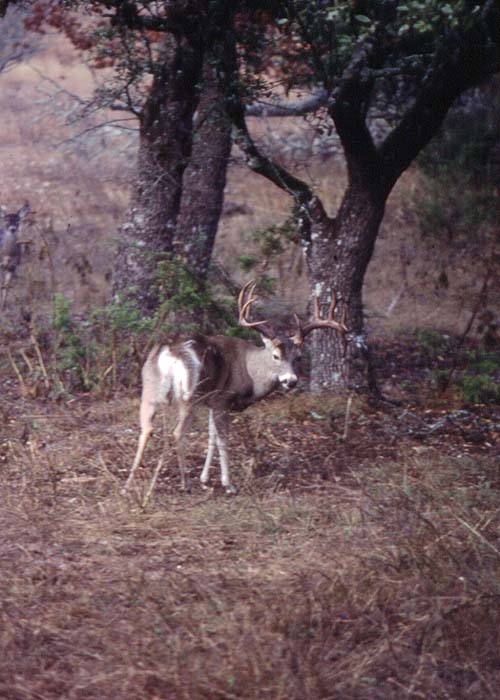 Usually
if a deer becomes suspicious, he will pick his head up and back and begin
to turn it in the direction he plans to run. At that moment, you must
aim if you want to get a shot. Also you must understand the deer will
drop down and jump in the direction in which he points his head. Think
about the buck's head as the steering wheel of his body. If he has his
head up and back to the left when you shoot your gun or your bow, more
than likely he will squat and jump to the left. By anticipating this movement,
you can aim a little low and to the left and bag the buck.
Usually
if a deer becomes suspicious, he will pick his head up and back and begin
to turn it in the direction he plans to run. At that moment, you must
aim if you want to get a shot. Also you must understand the deer will
drop down and jump in the direction in which he points his head. Think
about the buck's head as the steering wheel of his body. If he has his
head up and back to the left when you shoot your gun or your bow, more
than likely he will squat and jump to the left. By anticipating this movement,
you can aim a little low and to the left and bag the buck.
Tomorrow: Stomping Deer, Bristled-Up Bucks, Running Bucks and Calm Deer
Check back each day this week for more about When to Shoot ...
Day 1 -The Importance of
Knowing When to Shoot
Day 2 -The Mood of the Deer Will Tell You
When to Take the Shot
Day 3 -Nervously Feeding Deer
Day 4 -Stomping Deer, Bristled-Up Bucks,
Running Bucks and Calm Deer
Day 5 -Paying Attention to Deer to Know When
to Shoot