
|
Features
|
|
|
|
Books
|
|
|
|
Fun & Games
|
|
|
|
Contact Us
|
|
|
John's Journal... Entry 103, Day 4
ONE HUNDRED BASS A DAY
COYOTE LAKE
 EDITOR'S
NOTE: Drayton Pruitt of Livingston, Alabama, considers hunting and
fishing not recreations that he participates in but also the two outdoor
sports he's passionate about. The fields, the land and the lakes where
Pruitt grew up hunting and fishing as a boy he worked to buy as a man.
Once he purchased the land and the water, he then set out to produce hunting
and fishing experiences for today's sportsmen of the type and the quality
that he knew in his youth. According to Pruitt, "In the old days,
you could find 10 to 20 coveys of quail in a day of hunting. You could
also catch many big bass in the farm ponds around Livingston. But as timber
practices, farming practices and urbanization changed the face of the
landscape, this region lost much of that rich hunting and fishing heritage.
Through using the best wildlife-management practices available, we set
out to develop a quail-hunting preserve and a bass-fishing program to
rival any in the nation."
EDITOR'S
NOTE: Drayton Pruitt of Livingston, Alabama, considers hunting and
fishing not recreations that he participates in but also the two outdoor
sports he's passionate about. The fields, the land and the lakes where
Pruitt grew up hunting and fishing as a boy he worked to buy as a man.
Once he purchased the land and the water, he then set out to produce hunting
and fishing experiences for today's sportsmen of the type and the quality
that he knew in his youth. According to Pruitt, "In the old days,
you could find 10 to 20 coveys of quail in a day of hunting. You could
also catch many big bass in the farm ponds around Livingston. But as timber
practices, farming practices and urbanization changed the face of the
landscape, this region lost much of that rich hunting and fishing heritage.
Through using the best wildlife-management practices available, we set
out to develop a quail-hunting preserve and a bass-fishing program to
rival any in the nation."
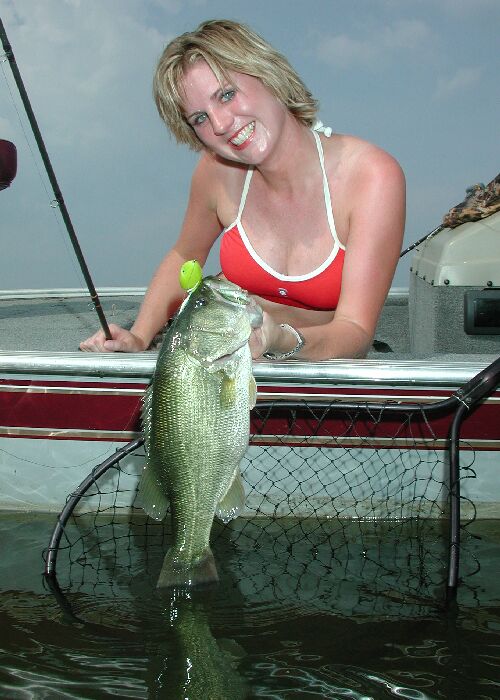
To grow bass fast, not only do you have to have a abundance of food, but you must also have structure and cover in the lake to provide ambush points. Then the bass can easily and effectively feed on the prey fish present in the lake. The less energy a bass has to expend to catch and eat food, the faster he can grow. Structure also provides target points at which anglers can fish where they're most likely to catch fish. P-Arrow Plantation built Coyote Lake with the structure fisherman in mind.
 Phillips:
Why did you decide to build the Coyote Lake?
Phillips:
Why did you decide to build the Coyote Lake?
Pruitt: After I saw Ray Scott's video on how to build a pond that
would produce big bass, I thought that Scott had a lot of really good
ideas that could help me in my pond construction. I adopted many of the
ideas that Scott made in his tape. But I modified some of his recommendations
to fit the soil type, terrain and structure I had available. One of the
things I did in the Coyote Lake was to build a 30-foot-wide and 15-foot-deep
trench that ran from the drainpipe at the dam around an island and all
the way to the end of the pond. When I created an island, I built stairstep
ledges down to the trench so that the bass could hold in different water
depths at different times of the year. I also acquired the concrete that
had previously been old sidewalks in the city of Livingston. I piled-up
this old concrete in many different areas throughout the lake to provide
more habitat and structure for the bass. Next, I planted cypress trees
out on the island, so that their root systems would also create underwater
habitat for the bass and the bream in the lake.
As the lake began to fill up, I bought 600 pounds of live crawfish and put those crawfish on and around those concrete structures. The crawfish could hide in those structures to escape the bass and burrow into the mud to reproduce. One thing you have to remember if you use crawfish as a food source for your bass is that you have to give the crawfish a place to hide from the bass to keep the bass from completely wiping out the crawfish and eliminating them from your pond. If you give your crawfish a hiding place, then you can keep a fresh crop of crawfish coming on to feed the bass. Once the pond was stocked with young bass and bream, we waited until the young bass were mature and then started stocking the pond with coppernose bream, tilapia and threadfin shad. The threadfin could survive in that deeper water that we provided by digging that deeper trench.
Phillips: We know that oxygen depletion in a lake
is a big concern of sport fishermen and commercial catfish growers. How
are you solving the problem of oxygen depletion in your bass ponds?
Pruitt: We have aerators in all of our ponds. To help stimulate
the bass to bite, we insure that the bass and the other fish don't die
from oxygen depletion. Besides putting oxygen into the water, the aerator
creates a current, an often necessary ingredient to stimulate bass to
feed. As we built our ponds and are managing our ponds, we not only want
to grow big bass. We also want to grow big bass our customers can catch.
So we want to incorporate the elements that not only cause the bass to
grow but also stimulate them to eat.
 Phillips:
What are the tactics you're using to cause bass to grow bigger and feed
more accurately?
Phillips:
What are the tactics you're using to cause bass to grow bigger and feed
more accurately?
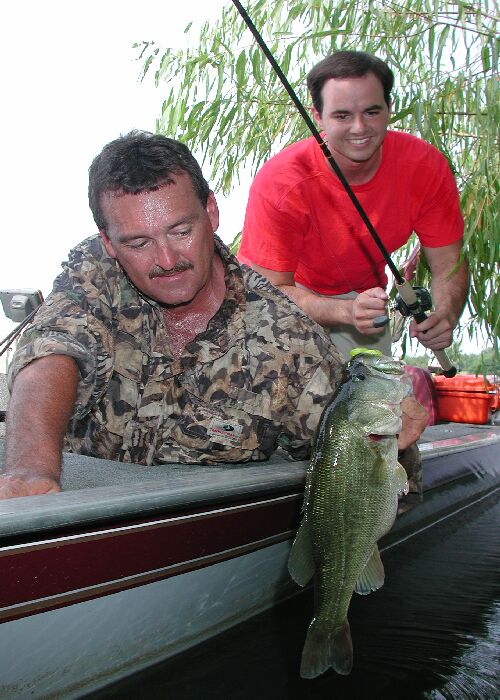
Pruitt: Biologists tell us that if you can maintain threadfin shad
in your pond, these shad will stimulate the bass to feed and grow more
actively than if you don't have threadfin shad in your ponds. By digging
a deep trench in the bottom of the pond and by using aerators to turn
the water over so that it's better oxygenated and cooler, the shad seem
to be able to survive in these deeper depths. Too, we mix our bass up.
By that I mean, we have both the Florida strain and the northern strain
of largemouth bass in our ponds. The Florida strain seem to grow bigger
and quicker, but they're more difficult to catch. The northern strain
of largemouth bass doesn't put on weigh as rapidly as the Florida strain
does, but they are easier to catch because they feed aggressively and
more actively. Also when we built this lake, we put in a good number of
bass weighing from 7 to 10 pounds each. Then we insured that we had trophy
bass in the lake before we ever opened it to the public.
Phillips: How big was the initial stocking of
bass in the lake before you added the lunkers?
 Pruitt:
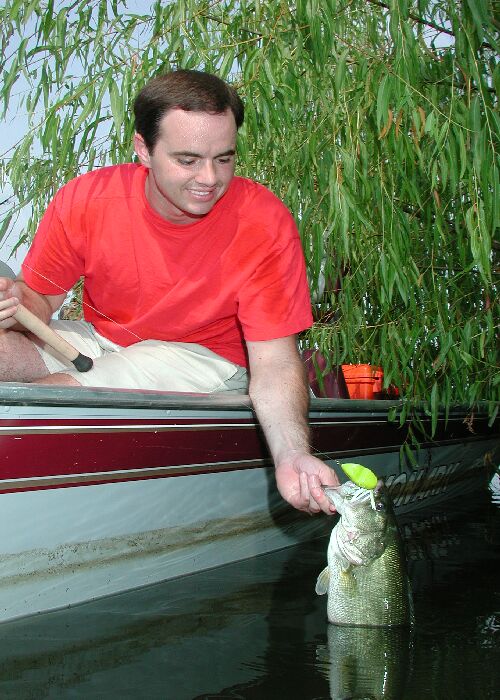
The bass in the lake were averaging 4 pounds before we put in the real
trophies. So we know we have plenty of bigger bass in the lake for the
anglers to catch. Now our fisherman will catch 2- to 5-pound bass regularly.
Pruitt:
The bass in the lake were averaging 4 pounds before we put in the real
trophies. So we know we have plenty of bigger bass in the lake for the
anglers to catch. Now our fisherman will catch 2- to 5-pound bass regularly.
For more information on P-Arrow Plantation, you can write
P.O. Box 1037, Livingston, Al 35470; call (205) 652-7990 or (800) 949-7990;
e-mail parrowplantation@aol.com; or, visit www.bitzandpieces.net
TOMORROW: OTHER P-ARROW LAKES
AND QUAIL HUNTING
Check back each day this week for more about P-Arrow Plantation...
Day 1 - P-Arrow Plantation
Day 2 - Catch Big Bass Every Day
Day 3 - P-Arrow Plantation Becomes A Reality
Day 4 - Coyote Lake
Day 5 - Other P-Arrow Lakes and Quail Hunting